2026 What to Pack for China? The Dos and Don'ts of Packing for a Trip to China

by Trip.com
March 25, 2026

If you're planning a trip to China, packing can feel like a puzzle. Trip.com's guide walks you through what to bring, including clothes, travel documents, and entry requirements, so you can travel with confidence.
to Shanghai
to Guangzhou
to Beijing
See all flights


What to Pack for China: What You Really Need
If you're short on time, no need to stress. Here's the cheat sheet. Throw these in your bag and you're good.
No. | Item | Notes |
1 | Passport and Chinese visa | Valid for at least 6 months. Keep a digital copy. |
2 | Travel insurance and copies of important documents | Store copies separately or in the cloud. |
3 | Cash (Chinese Yuan) and bank cards | Mobile payments are common, but cash is good backup. |
4 | Power adapter (Type A, C, or I) | A universal adapter works best. |
5 | Comfortable walking shoes | You'll walk a lot — prioritize comfort. |
6 | Weather‑appropriate clothing | Pack in layers and check the forecast. |
7 | Smartphone with essential China travel apps | Set up Alipay, WeChat, and a VPN before arrival. |
Tip: For a smoother trip, it’s best to plan your packing list based on the season and your travel style.
What to Pack for China: Travel Documents
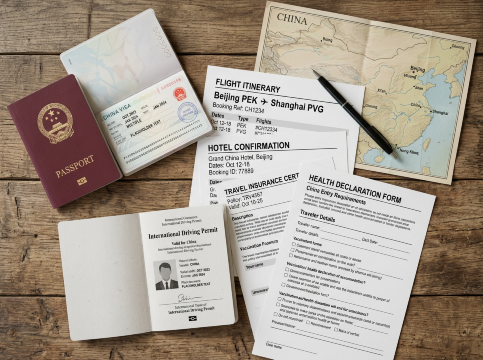
Travel documents for China.
Passport and Visa
Just make sure your passport is valid for at least six months, and your visa covers your travel dates. Easy to miss, but crucial.
Copies of Important Documents
A little backup never hurts. Keep a photocopy or digital scan of your passport, visa, and ID somewhere apart from the real ones.
Travel Insurance & Emergency Contacts
Have your insurance policy details and local emergency numbers handy. Save them on your phone and keep a physical copy as well.
What to Pack for China: Payment & Connectivity
When planning what to pack for China, it’s essential to think beyond physical items and prepare for how you’ll pay and stay connected during your trip. China’s digital ecosystem is highly advanced, and being ready in this area will make your experience much smoother.
Category | Key Points |
Cash and Cards | Carry some RMB for small purchases and backup. International credit cards are accepted in high‑end hotels but may not work everywhere. |
Mobile Payments | WeChat Pay and Alipay are widely used. Link your international bank card to these apps before your trip. |
SIM Card or eSIM | Essential for maps, translation, and payments. Get a local SIM, eSIM, or roaming plan before arrival. |
VPN Access | Many international apps (Google, WhatsApp, Instagram) are restricted. Install a reliable VPN before you go. |
Offline Backups | Download maps, translation apps, and key travel info in advance. You may need them without internet. |
Get your payment apps ready. Make sure you have data when you land. Set up a VPN before you go. That’s it — no scrambling for cash, no app headaches. Handle these few things, and your trip will go way smoother.
See all attractions
 713263 booked




What to Pack for China: Season by Season

China Packing Guide
When planning what to pack for China, the season can make a big difference. China’s climate varies widely across regions, but this simple season-by-season guide will help you pack smart and stay comfortable wherever you go.
Spring (March to May):
- Light layers: Bring a mix of long-sleeved shirts, light sweaters, and a medium-weight jacket.
- Trousers and jeans: Comfortable pants for daily wear.
- Comfortable walking shoes: For exploring cities and attractions.
Summer (June to August):
- Lightweight and breathable clothing: T-shirts, tank tops, and shorts to stay cool in the hot and humid weather.
- Sun hat and sunglasses: For sun protection.
- Sandals or breathable shoes: Keep your feet comfortable during the summer heat.
Autumn (September to November):
- Layered clothing: Bring long-sleeved shirts, light sweaters, and a medium-weight jacket for cooler temperatures.
- Trousers and jeans: Comfortable pants for daily wear.
- Comfortable walking shoes: For exploring cities and attractions.
Winter (December to February):
- Warm layers: Pack thermal tops, sweaters, and a heavy coat to stay warm in cold temperatures.
- Winter accessories: Scarf, gloves, and a beanie or hat to protect against the chill.
- Insulated footwear: Warm and waterproof boots for walking in snowy or wet conditions.
Rainy Season:
- Raincoat or umbrella: Be prepared for occasional rain, especially in the southern regions.
- Waterproof footwear: Consider bringing waterproof shoes or boots.
- If you plan to attend formal events or dining occasions, you may want to pack some formal clothing.
What Not to Pack for China
When you're planning what to pack for China, it’s just as important to know what to leave behind as it is to decide what to bring. Overpacking will only slow you down, especially when you’re navigating crowded train stations, airports, and city streets.
- Too Many Shoes: You might want to pack several pairs for different outfits, but in reality, you’ll probably only wear one or two. A comfortable walking pair is essential; a second for evenings or weather is optional. Anything extra just takes up space.
- Heavy Toiletries: Full‑size toiletries add unnecessary weight. Shampoo, body wash, toothpaste—all are easy to find in supermarkets, convenience stores, or hotels across China.
- Multiple Books: Bringing several books adds significant weight. A single book, an e‑reader, or reading apps on your phone are much more practical, especially for long‑distance travel.
- Bulky Items You Can Buy Locally: From umbrellas to extra clothing, many bulky or low‑cost items are widely available in China at affordable prices.
Where to Find More Travel Info
China Train Apps for Foreigners: 12306 & Trip.com Booking Guide
Learn how to use China’s top train apps (12306 official, Trip.com) for foreigners—booking steps, refunds, HSR tips.
November 3, 2025
China eSIM with VPN - 5G Unlimited High Speed SIM
China eSIM with built-in VPN for foreign travelers. Find top plans, device compatibility checks, setup steps, provider reviews, and how to choose between eSIM+VPN vs SIM+VPN.
April 22, 2026
China Entry Requirements: Visa-Free & Customs Rules
Learn about 2026 China entry requirements & rules, including 30-day visa-free waivers, 240-hour transit policies, required documents, customs rules for foreigners worldwide.
November 24, 2025
[10% Off] China Hotel Recommendations
Top Shanghai Hotels
Top Beijing Hotels
Top Guangzhou Hotels
See All Hotels























What to Prepare for a Trip to China?
- Visa & Entry Tips China’s 240-hour visa-free transit policy now covers 54 countries, incl. the US, UK, Canada, and Brazil, allowing up to 10 days during layovers. Learn more about China Entry Tips to land in China easily.
- Getting Connected VPNs are vital for accessing Google, WhatsApp, Instagram, etc in China. Set one up before arriving. China eSIMs are the easiest option for data and bypassing restrictions. Pocket Wi-Fi devices work best for group but are pricier and require pickup/return.
- Money Exchange & Tax Refunds Exchange money in China banks (better rates than airports). ATMs accept foreign cards, but notify your bank first. For tax refunds, spend over ¥500 at stores with a "Tax-Free" sign. Keep receipts and get forms stamped at customs before departure.
Must-Have Apps in China
- China Payment Apps Forget cash. Chinese use Alipay (I like it better) or WeChat Pay to pay for everything in China. Scan a QR code at noodle stalls, metros, even temples. Link your foreign Visa/Mastercard before landing.
- China Map Apps Amap (Gaode Map) & Baidu Map (limited English) is what locals use, with real-time navigation, metro/bus routes, and traffic updates. Apple Maps does a good job too if you're already an IOS user.
- China Transport Apps Street taxis are cheap, but drivers rarely speak English. Use China Taxi App like DiDi (China’s Uber)—set your destination in English, pay by Alipay.
- China Travel Apps 15+ China trips taught me: Use Trip.com. It's the best English app for booking China trains/flights/hotels + finds Trip.com deals.
- China Dating Apps Locals use Tantan (China’s Tinder) and Momo. WeChat’s “People Nearby” works too, but expect language barriers unless your Mandarin’s decent.
- China Food App Use Meituan (also helps find nearby restaurants) or Ele.me for food delivery—both have English mode. No English menu in restaurants? Scan the QR with Alipay's translator.
FAQs about What to Pack for China
-
Which car is mostly used in China?
-
Is driving in China difficult?
-
What cannot bring into China?
Disclaimer: This article has been provided by an individual contributor or third party platform. If there is any discrepancy regarding the copyright, please contact us directly and we will delete the content immediately.
Trending Searches
-
Air Travel Guide
-
Latest Flight Deals
-
Popular Flight & Hotel Packages
-
Getting Around
-
eSIM/SIM card
- Zhangjiajie Vacation Packages
- Langkawi Vacation Packages
- Tokyo Flight and Hotel
- Langkawi Flight and Hotel
- Seoul Flight and Hotel
- Bangkok Vacation Packages
- Charlottesville Vacation Packages
- Kuala Lumpur Flight and Hotel
- Rodrigues Island Flight and Hotel
- Cebu Flight and Hotel
- Macau Flight and Hotel
- Buenos Aires Vacation Packages
- Macau Vacation Packages
- Dresden Vacation Packages
- Porto Santo Vacation Packages
- Haneda Airport Limousine Bus
- Shanghai Metro Map
- Guilin Airport
- Shinkansen Tokyo to Kyoto and Osaka
- Tokyo Car Rental
- China Train Business Class vs Second Class
- Xi’an Airport
- Shanghai Airport to City
- Foshan Metro
- Incheon International Airport to Seoul
- Changsha Metro
- Chengdu Airport
- Nara Transportation
- Shanghai Airport Transfers
- Macau to Hong Kong
- Narita Airport to Shinjuku
- Osaka Station to Kyoto Station